
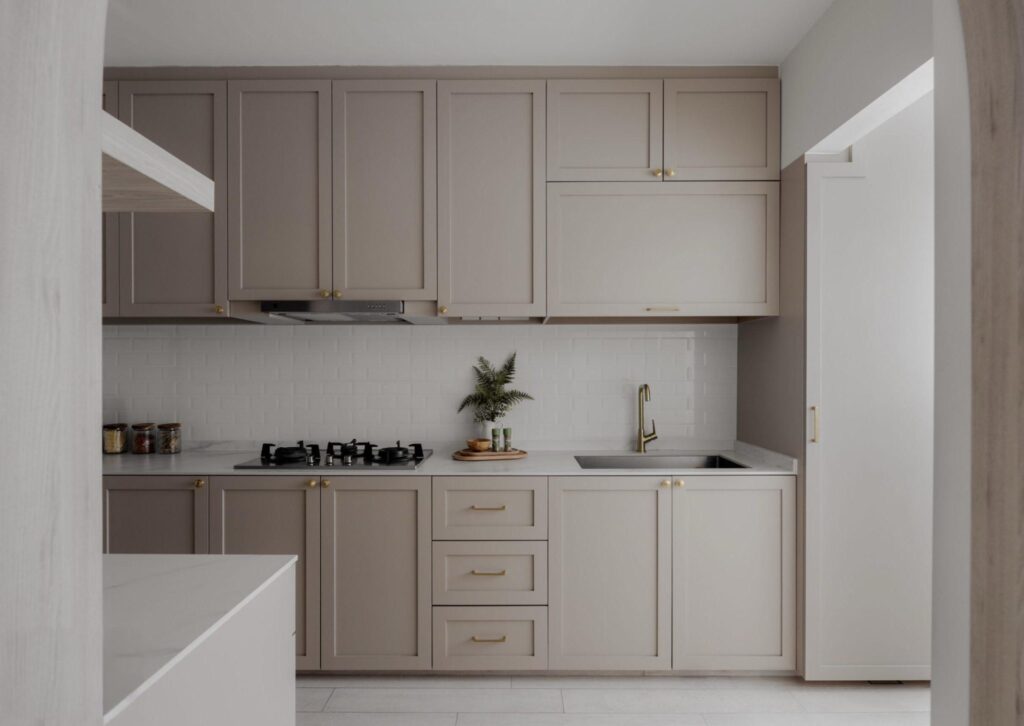
The kitchen has quietly become the most contested piece of real estate in any Indian home. Walk into a typical Mangalorean household, and you’ll find three generations debating whether the gas hob belongs near the window or against the load-bearing wall. Grandmothers want their grinding stones within arm’s reach. Teenagers demand breakfast bars for their cornflakes and coffee. Parents simply want enough storage to hide the seventeen varieties of pickle that somehow multiply in coastal homes.
This is where thoughtful design becomes essential, not decorative. A well-planned kitchen doesn’t just look good in photographs. It accommodates the idli steamer, the appam pan, and the pressure cooker without making you perform gymnastics every morning. It understands that Mangalorean cooking involves wet grinding, fish cleaning, and the kind of deep-frying that sends splatter patterns across poorly planned backsplashes.
Black Pebble Designs has spent years studying how families actually use their kitchens in this coastal city. Not how design magazines suggest they should use them, but how they really do. The result is kitchen transformations that respect local cooking habits whilst incorporating storage solutions and workflow patterns that make daily life measurably easier.
Understanding the Coastal Kitchen Brief
Mangalorean kitchens carry specific burdens that aren’t immediately obvious to outsiders. The humidity alone makes material selection critical. Particle board swells, laminate edges lift, and standard hinges develop that characteristic coastal rust within eighteen months. Then there’s the cooking style itself, which involves more heat, more moisture, and more vigorous scrubbing than you’d find in landlocked regions.
A family making kori rotti on Sunday morning generates steam, spice dust, and the kind of aromatic intensity that either gets properly ventilated or lingers in curtains for days. The same kitchen might host banana leaf meals during festivals, requiring clear floor space and different traffic patterns than a plated dinner would demand.
Good interior designers in Mangalore like Black Pebble Designs, begin every kitchen project with questions about these actual usage patterns. How often do you make fish curry? Where do you currently store your coconut scraper? Do you make your own masala powders? How many people typically cook simultaneously during festivals?
These aren’t academic questions. The answers determine everything from chimney capacity to the height of electrical sockets. Place a mixer grinder outlet too high, and someone’s grandmother will strain her shoulder every morning. Position the dish drain too far from the tap, and water trails across the counter become a permanent feature.
The Modular Kitchen Debate
The phrase “Modular Kitchen in Mangalore” triggers surprisingly strong opinions at dinner parties. Some homeowners remain sceptical, remembering earlier installations where imported designs failed to accommodate Indian cooking realities. Others have seen genuinely good examples and wonder why they’ve been struggling with their inherited kitchen layout all these years.
The truth lies between these extremes. Modular systems offer real advantages, particularly in terms of maximising storage and creating ergonomic work zones. But they require serious adaptation for local conditions. Standard European base units, for instance, are often too deep for the compact footprint of older Mangalorean homes. The shelf spacing that works for pasta and cereal boxes doesn’t suit the tall bottles of coconut oil or the wide vessels used for payasam.
Black Pebble Designs builds modular systems that acknowledge these differences from the outset. Their base units incorporate deeper drawers specifically sized for pressure cookers and idli steamers. Corner solutions use carousel systems that actually make those awkward spaces functional rather than becoming graveyards for forgotten serving bowls.
The material palette shifts too. Instead of glossy finishes that show every fingerprint and watermark, they favour marine-grade plywood with textured laminates that disguise the inevitable wear. Hardware gets upgraded to stainless steel with proper rust resistance. Drawer channels use soft-close mechanisms rated for heavier loads because Indian cookware simply weighs more than its continental equivalent.
Workflow Design That Reflects Reality
Professional kitchens worldwide follow the triangle principle: sink, stove, and refrigerator form three points of an efficient workspace. Home kitchens benefit from the same thinking, but residential designers too often forget the wet zone that traditional Indian cooking requires.
A proper coastal kitchen needs four zones, not three. The wet preparation area, where vegetables get washed and fish gets cleaned, deserves its own dedicated space with excellent drainage and a surface that can handle both turmeric and raw protein. Position this incorrectly, and you create cross-contamination risks or force unnecessary movement during meal prep.
The dry zone handles spice grinding, dough kneading, and the assembly work that doesn’t involve running water. This area benefits from lower counters, better light, and electrical access for mixers and grinders. Many Mangalorean families still make fresh masala pastes daily. Giving this activity its own territory rather than forcing it to compete for space near the stove makes a tangible difference in morning efficiency.
The cooking zone itself needs more thought than simply mounting a hob. Platform height matters enormously. Standard counter heights often force shorter family members onto tiptoes while giving taller cooks backache. Black Pebble Designs measures the primary cooks during consultation and adjusts working heights accordingly, sometimes incorporating dual-height sections when multiple family members share kitchen duties.
The storage and serving zone completes the circuit. This is where clean dishes live, where food gets plated, and where the organized chaos of a busy household gets temporarily corralled before meals. Positioning this near the dining area reduces the back-and-forth that makes weekday dinners feel like marathon events.
Material Choices That Last
Coastal humidity destroys ambitious material choices with gleeful efficiency. That gorgeous solid wood you saw in a Bangalore showroom? It’ll warp within six months here. The subtle cement finish that looked perfect on Instagram? It’ll develop water stains you cannot clean.
Marine-grade plywood with boiling water-proof adhesive forms the structural backbone of kitchens that survive Mangalorean conditions. This costs more upfront but remains stable through monsoons and summer humidity cycles. The laminate layer needs equal attention. High-pressure laminates with thickness above 1mm resist the scratches and heat marks that cooking inevitably inflicts.
Counter surfaces provoke endless debate. Granite remains popular because it genuinely works. It handles hot vessels, acidic tamarind paste, and aggressive scrubbing without complaint. Engineered quartz offers more colour options and eliminates the porosity issues that natural stone sometimes has, though it costs more and requires occasional resealing.
Backsplashes deserve better than afterthought tiles. The area behind the stove takes a pounding from oil splatter and high heat. Full-height protection using large-format tiles minimises grout lines, which means less scrubbing and fewer places for grime to hide. Some families opt for toughened glass panels instead, which clean easily but require professional installation and careful handling during construction.
Lighting: The Overlooked Essential
Most inherited kitchens have one ceiling light and a prayer. This forces cooks to work in their own shadow during evening meal prep, which ranges from inconvenient to genuinely dangerous when sharp knives are involved.
Proper kitchen lighting requires layers. Ambient ceiling lights provide general visibility. Task lighting under wall cabinets illuminates counter surfaces where actual work happens. Accent lighting inside glass-front cabinets makes finding specific items possible without emptying three shelves.
The colour temperature matters more than people expect. Cool white LEDs make morning coffee prep feel clinical and harsh. Warm white creates ambience but can make vegetables look less fresh. Neutral white around 4000K strikes a balance that works across different times of day.
Placement requires genuine thought. Under-cabinet lights mounted too far forward cast shadows from your hands onto the workspace. Position them 25-30 centimetres from the front edge, and they illuminate what you’re actually doing rather than the back of the counter.
Storage Solutions That Adapt
The average Mangalorean kitchen stores an bewildering variety of items. There’s the everyday dinner service, the festival dishes that appear twice annually, the vessels for specific preparations that would mystify outsiders, and the mysterious collection of containers that multiply despite occasional purges.
Standard cabinetry treats everything identically, leading to deep shelves where items vanish into darkness or corner spaces that require archaeological excavations. Better solutions use internal organisers: pull-out drawers in base units, vertical dividers for baking trays and cutting boards, corner pull-outs that bring items forward rather than forcing you to reach into dark recesses.
The spice storage conversation deserves its own consultation. Some families keep perhaps twenty varieties of whole and ground spices in regular rotation. Storing these in deep shelves means constantly pulling half of them out to reach the one you need. Pull-out spice racks, mounted either in base units or inside wall cabinet doors, keep everything visible and accessible.
Appliance storage has evolved beyond merely finding space for the mixer grinder. Modern Mangalorean kitchens might house wet grinders, breakfast sandwich makers, electric kettles, rice cookers, and the occasional air fryer. Creating dedicated appliance garages with electrical points means these tools remain plugged in and ready rather than buried in cupboards because dragging them out feels like too much effort.
The Transformation Timeline
Actual kitchen renovations take longer than showroom visits suggest. A complete transformation typically spans six to eight weeks from demolition to completion. This includes plumbing rerouting, electrical upgrades, and the inevitable discoveries that come from opening walls in older homes.
Black Pebble Designs plans temporary kitchen setups that keep families fed during construction. A countertop burner, a temporary sink connection, and strategic furniture placement can create a functional cooking space in a spare room or covered balcony. This isn’t glamorous, but it beats eating takeaway for two months.
The design phase itself requires three to four meetings. Initial consultations capture requirements and measure spaces. Second visits present design options with rendered visualisations that show exactly what the finished kitchen will look like. Final meetings confirm material selections, hardware choices, and the thousand small decisions that collectively define the space.
Investment and Returns
Kitchen renovations represent significant investment. A complete transformation for a standard 100 to 120 square foot Mangalorean kitchen typically ranges from four to seven lakhs rupees, depending on material choices and appliance integration. This feels substantial until you calculate daily usage over the space’s expected lifespan.
A well-designed kitchen serves families for fifteen to twenty years before requiring major updates. Used three times daily, that’s roughly 20,000 cooking sessions. Suddenly, even the higher investment begins looking reasonable per use.
The returns appear in unexpected places. Better storage means less time searching for ingredients. Improved workflow reduces the physical fatigue that cooking for large families inevitably creates. Proper ventilation means your kurta doesn’t smell like fish fry after making lunch.
These aren’t the dramatic transformations that renovation shows promise. They’re the quiet improvements that compound daily, turning necessary domestic labour into something closer to pleasant routine. That’s ultimately what good kitchen design delivers in Mangalore’s culinary spaces.