
Summary
The House State Affairs Committee voted to send HB 11-61, which would add targeted exceptions for firefighters, law-enforcement personnel and performers to last year’s law on multi-occupancy changing rooms and sleeping quarters, to the 40 first day after proponents said the change is needed to avoid operational and anti‑discrimination conflicts.
The House State Affairs Committee on Monday advanced legislation to clarify how a 2025 law on multi‑occupancy changing rooms, restrooms and sleeping quarters applies to political subdivisions and state agencies.
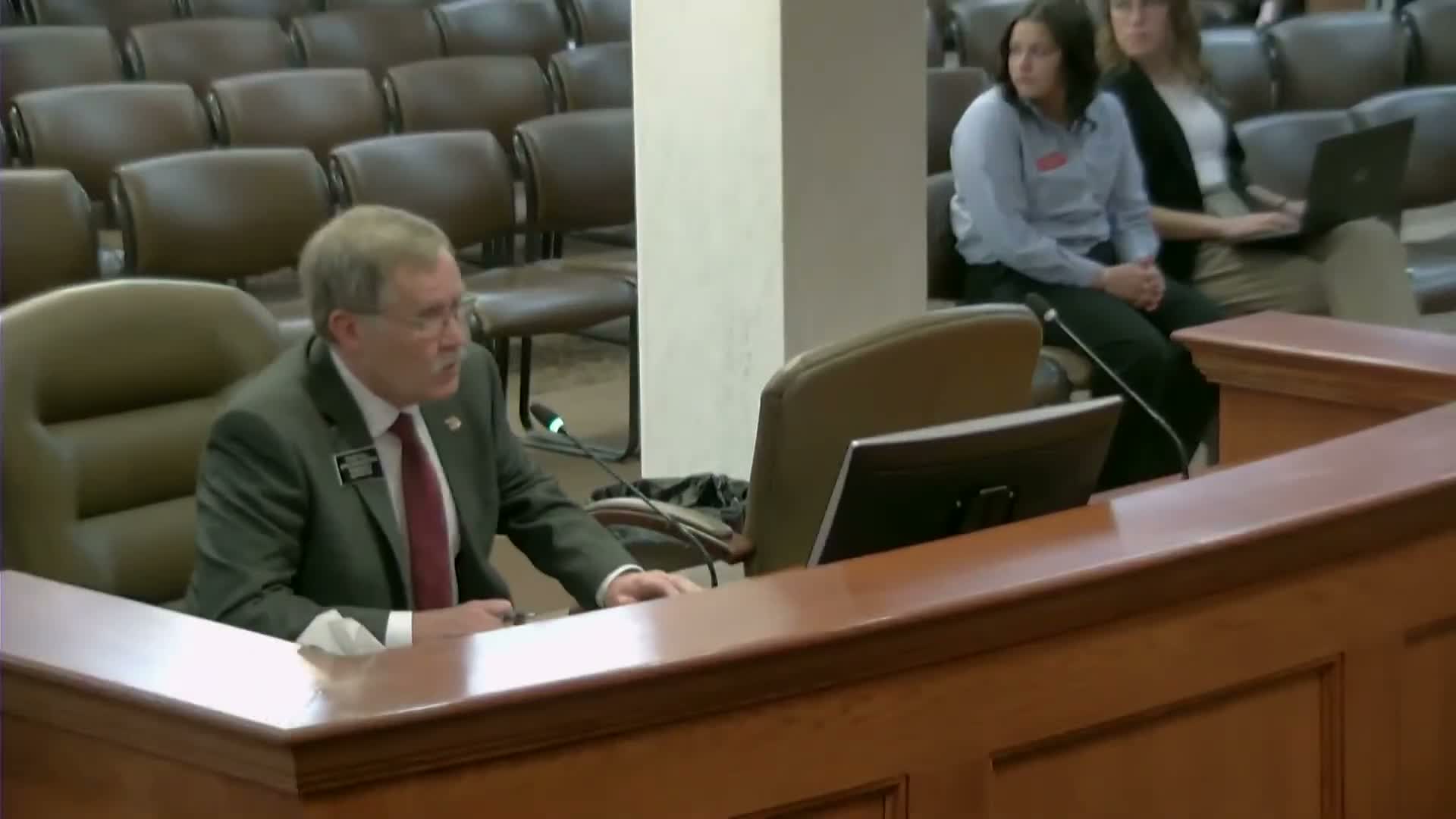
Representative David Cole, the prime sponsor of HB 11‑61, told the panel the bill aims to add narrowly targeted exceptions after municipalities and first responders raised implementation problems under last year’s HB 1259. He said some Sioux Falls fire stations have open‑bay sleeping quarters where beds are co‑located with minimal separation and that enforcing a gender‑designated sleeping‑room rule would limit station assignments and opportunities for female firefighters.
Sioux Falls Fire Rescue Chief Matt Maccready, testifying in support, said six Sioux Falls stations built between 1912 and 1989 have multi‑occupant sleeping quarters and that designating those rooms by gender would constrain assignments, complicate daily staffing and run afoul of state and federal anti‑discrimination laws. Amber Mulder, senior assistant city attorney for Sioux Falls, and other municipal officials said the amendment is intended to carve out political subdivisions and city‑owned performance venues so firefighters, law enforcement in certain operations and performers changing quickly backstage can be accommodated without unintended legal or staffing consequences.
Opponents urged caution. Norman Woods of Family Voice Action said the current law’s privacy protections were intended to be broad and warned that the bill’s carve‑outs could be interpreted to remove protections for many people, including in settings that are not clearly emergency or performance related. Elsa Bishop, a Sioux Falls youth theater participant, told the committee the change could make amateur and school theater participants feel less safe and comfortable.
Supporters and the sponsor said the change does not alter school obligations under last year’s law and said the move adjusts statutory wording to cover employees of political subdivisions who perform ADA or regulatory inspections.
After questions and debate over drafting choices (including where the phrase “multi‑occupancy” appears in the statute), the committee voted to send HB 11‑61 as amended to the 40 first day. The committee recorded the motion as passing by a majority; the clerk reported “7 ayes, 5 nays, 1 excused.” HB 11‑61 will next appear on the calendar for floor consideration, where additional amendments could be offered.
The committee’s action was procedural; the bill as amended does not yet change statutory text outside the committee report.
link