
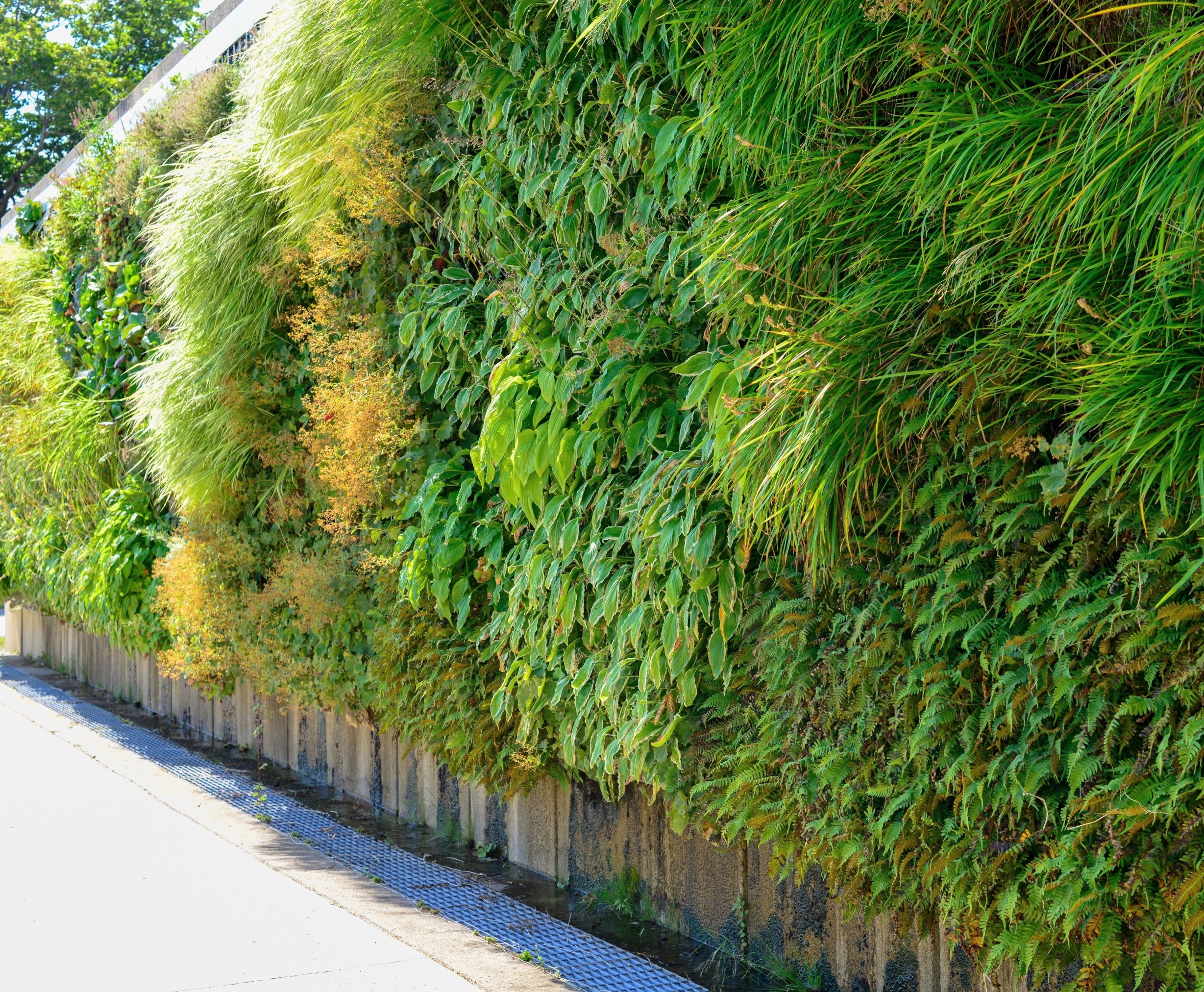
Cities grow fast, but nature often loses space during urban growth. Buildings replace trees, soil, and open land.
Birds, insects, and small animals struggle to find food and shelter in such settings. Living walls offer one practical way to bring nature back into city areas.

A living wall is a vertical surface on a building that supports plants growing in pockets or panels.
New research shows that well-designed living walls can support many forms of life and help protect urban biodiversity.
Why living walls matter in cities
Urban expansion reduces natural habitats and breaks connections between green spaces. Many animals depend on connected habitats to survive, move, and reproduce.
Living walls can act as small habitat patches placed directly onto buildings. Such structures create food sources, resting places, and shelter in locations where ground level green space remains limited.
Vertical green spaces also help cities in other ways. Plants cool buildings, reduce heat loss, improve air quality, and protect walls from weather damage.
When living walls include soil and suitable plants, ecological value rises further. Soil supports microbes and small animals that form the base of healthy food webs.
Living walls in Plymouth
Scientists and students from the University of Plymouth carried out a detailed study across three living wall sites.
Study locations included the University Sustainability Hub, the Genesis Building on Union Street, and the Sherford new town development.
Researchers observed insects, spiders, soil invertebrates, birds, and bats over several survey periods. Field observations tracked insects and spiders visiting plants.
Soil samples revealed hidden life living around roots. Acoustic tools recorded bird and bat activity. A nearby urban street without a living wall served as a comparison site.
Pollinators, spiders, and plant structure
Plant selection strongly shaped wildlife activity. Flowering plants offered nectar and pollen for bees and hoverflies.
Ivy, Mexican daisy, and honeysuckle attracted the highest variety of pollinators. Long flowering periods and accessible nectar made such plants valuable food sources.
Spiders also responded to plant structure. Plants with open and sturdy shapes supported web building species.
Ivy supported high spider numbers by offering dense cover and stable surfaces. Spiders help control insect populations, making presence important for balanced ecosystems.
Soil makes a major difference
Living walls using soil supported far more life than systems using artificial growing materials. Soil held moisture, nutrients, and organic matter.
Such conditions allowed mites, springtails, and other small animals to thrive. Soil organisms break down dead material and recycle nutrients back to plants.
Different plants influenced soil life in different ways. Some plant roots supported large and diverse soil communities, while others supported fewer species.
Such variation shows how plant choice shapes both above ground and below ground biodiversity.
Bird life around living walls
Bird surveys recorded more species and higher bird activity near living walls than near standard city streets. House sparrows, robins, and blackbirds used living walls for feeding and nesting.
Large soil-based installations offered greater habitat complexity, which supported higher bird diversity.
Living walls also function as stepping stones across urban landscapes. Birds can move between green spaces more easily when vertical habitats exist along streets and buildings.
Such connectivity supports long-term survival in fragmented city environments.
Limits of current planning systems
Current planning systems often undervalue living walls. In England, biodiversity rules focus on ground level habitats and classify living walls as artificial surfaces.
Such classification ignores real ecological contributions shown through field studies. Species-based assessment methods capture biodiversity value more accurately by counting real animals and plants rather than surface area alone.
Dr. Paul Lunt, the study’s lead author, is an associate professor in environmental science at the University of Plymouth.
“We’re in the middle of a global biodiversity crisis where wild species are increasingly being threatened by the changing climate and habitat loss,” said Dr. Lunt.
“We need to do everything we can to support our wildlife, and it is one of the reasons why living walls are becoming an increasingly visible feature of UK urban design.”
According to Dr. Lunt, this research provides one of the clearest assessments to date of their biodiversity benefits, as well as a policy challenge with current legislation meaning their ecological contributions are being undervalued in planning assessments.
“Based on our research, we feel there is a case for revisiting that if we are to fully realize the extent to which living walls can benefit our urban flora and fauna.”
Long-term value of living walls
The University of Plymouth has promoted living walls for many years. A living wall added to the Sustainability Hub in 2019 became part of ongoing research.
Earlier studies showed that such structures reduce heat loss from buildings by more than 30 percent. Combined benefits include energy savings, climate protection, and biodiversity support.
Research shows that living walls work best when designers use soil based systems, select diverse plants, and plan for long term care.
With careful design, walls can support insects, birds, and soil life while improving urban living spaces. Living walls offer proof that nature can return even in vertical spaces .
The study is published in the journal Urban Science.
—–
Like what you read? Subscribe to our newsletter for engaging articles, exclusive content, and the latest updates.
Check us out on EarthSnap, a free app brought to you by Eric Ralls and Earth.com.
—–
link