
With the warmer weather here, now is the time to preserve your homes’ exterior wood surfaces, from decks and porches to fences, siding and outdoor furniture. Before you lift a brush, though, keep in mind that less is more when it comes to staining exterior wood, says paint brand Sico.
“To perform best, stains must penetrate well and evenly across the surface of the wood, and applying a thick coating of stain doesn’t provide enough breathing room for the wood to do so,” said Louis-Philippe Morand, senior marketing manager for Sico. “The result of a heavy layer is that, despite spending hours on your staining project, you may end up with streaks and drip marks, and the surface protection may not be optimal, ultimately leading to peeling, flaking and moisture damage.”
According to Morand, the No. 1 challenge people have when it comes to wood staining is achieving an even and consistent finish. “This is what Sico retailers across the country tell us,” he said in launching a new line of one-coat “grab-and-go” wood stains, called Sico Formula 77, designed to make it simple for anyone to achieve a flawless stain finish – whether first-timers, DIYers or pros.
Here are some exterior staining tips to ensure best results for any staining job:
Preparation is key
Preparation can make or break a stain project, so ensure the surface to be stained is ready before you begin. Inspect the wood to make sure it’s free of dirt, dust, mildew, algae, moss, leaves, and loose wood fibres. If needed, use a wood cleaner or household solution (one part household bleach to three parts of water) to remove particles. Clean the surface with a garden sprayer or scrub with a hard bristle brush. Rinse well with water.
Dry, sand thoroughly
After rinsing, allow wood to dry for two to three sunny days. Sand the surface to remove any residue and open the pores of the wood for a better staining job, using 80–120 grit sandpaper for vertical surfaces and 60–80 grit sandpaper for horizontal surfaces. Test wood for absorbency by sprinkling water on the surface – if the water drops bead on the deck, you have more sanding to do, and if the water penetrates within two minutes or less, you’re ready to begin. Avoid staining whenever rain or any condensation is expected, such as late in the day as it gets cooler.
Coat every surface
Whenever possible and accessible, coat all six surfaces of the wood planks. Pay extra attention to covering end grains and any cut or damaged areas to ensure adequate sealing against moisture absorption. This helps control the amount of moisture that will naturally pass through the wood and allows the wood to breathe.
Apply like a pro
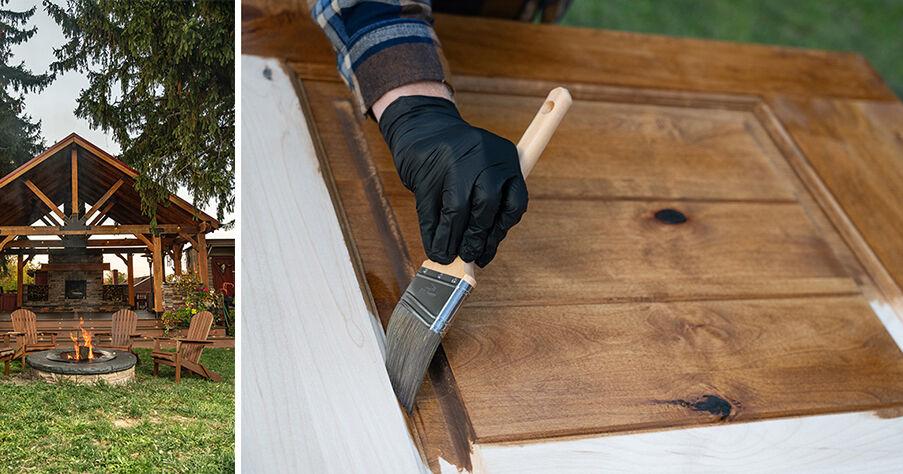
The ideal application tool for staining is a brush. Rollers, sprays and pads can also be used but may cause more pooling of the stain. For best results, apply the stain in the shade. Follow the sun as you work so that you’re always out of direct sunlight.
Re-stain regularly
To keep your exterior wood surfaces looking new, re-stain them every two to three years. Some surfaces may need more frequent staining, depending on their uses, such as heavy shoveling of a deck in winter. When re-staining, remember to properly prepare surfaces. Staining over cracks and peels is only a band-aid solution.
— sico.ca
— AB
link